
One bucket, 25 people
It once took a line of 25 people to get a single bucket of water onto a fire.
That was the bucket brigade. Neighbors lined up from the nearest water source to the burning building and passed buckets hand to hand. It took strength, coordination, a lot of bodies, and plenty of water spilled along the way.
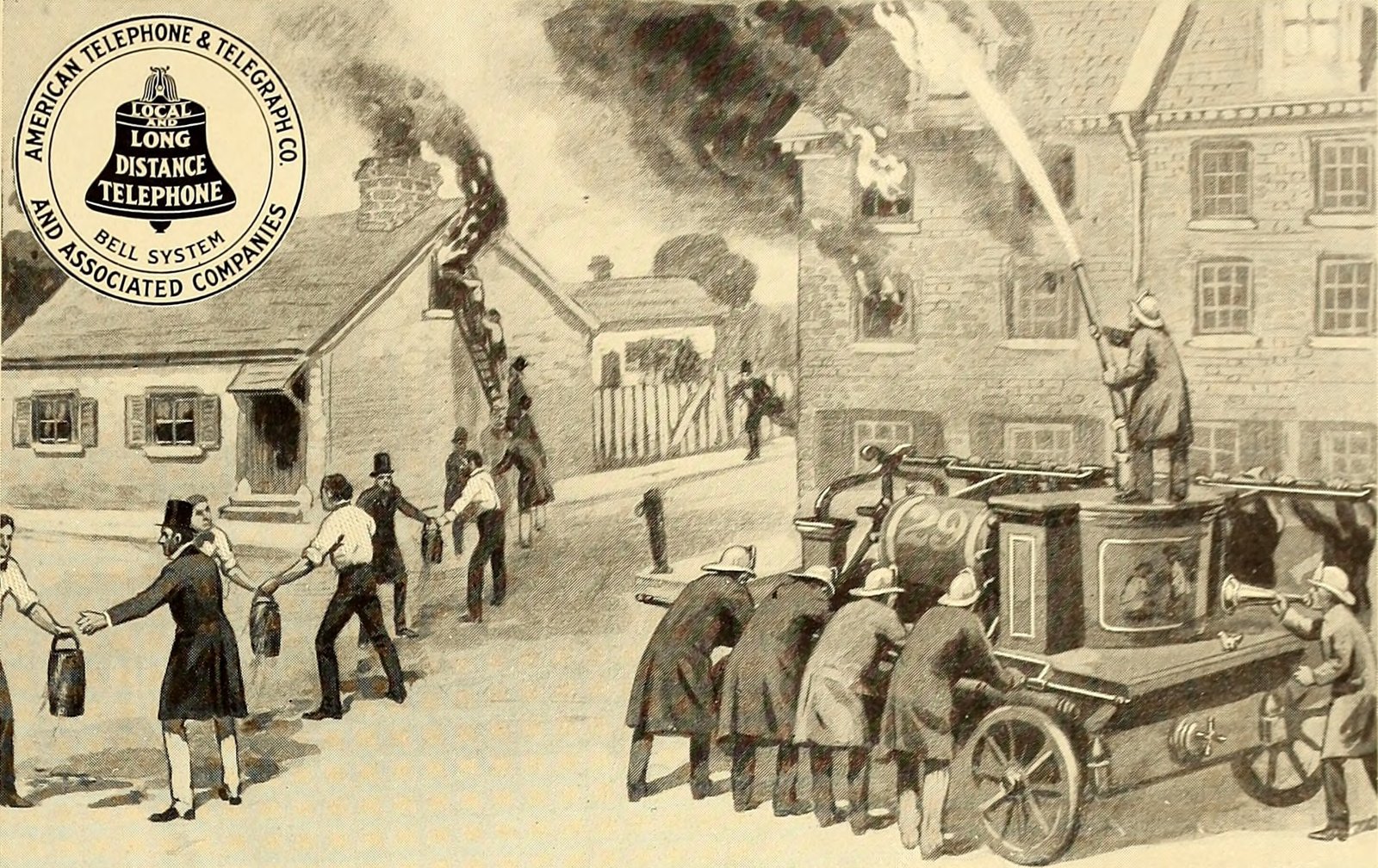
Nobody in that line worried the job would disappear. The work was brutal and it needed everyone. If you had asked what fighting fires required, the answer was simple: more people.
Hold onto that answer. The story gets interesting when it changes.
From muscle to leverage
Every major advance in firefighting replaced human muscle with machine leverage, and each one changed what the job looked like.
The hand-pumped engine, called a hand tub, came first. Lynn, Massachusetts had one by 1654 and Philadelphia by 1719 (Wikipedia). Leather hose followed around 1672, and by 1832 horses were pulling the engines to the fire (Haverhill Firefighting Museum).
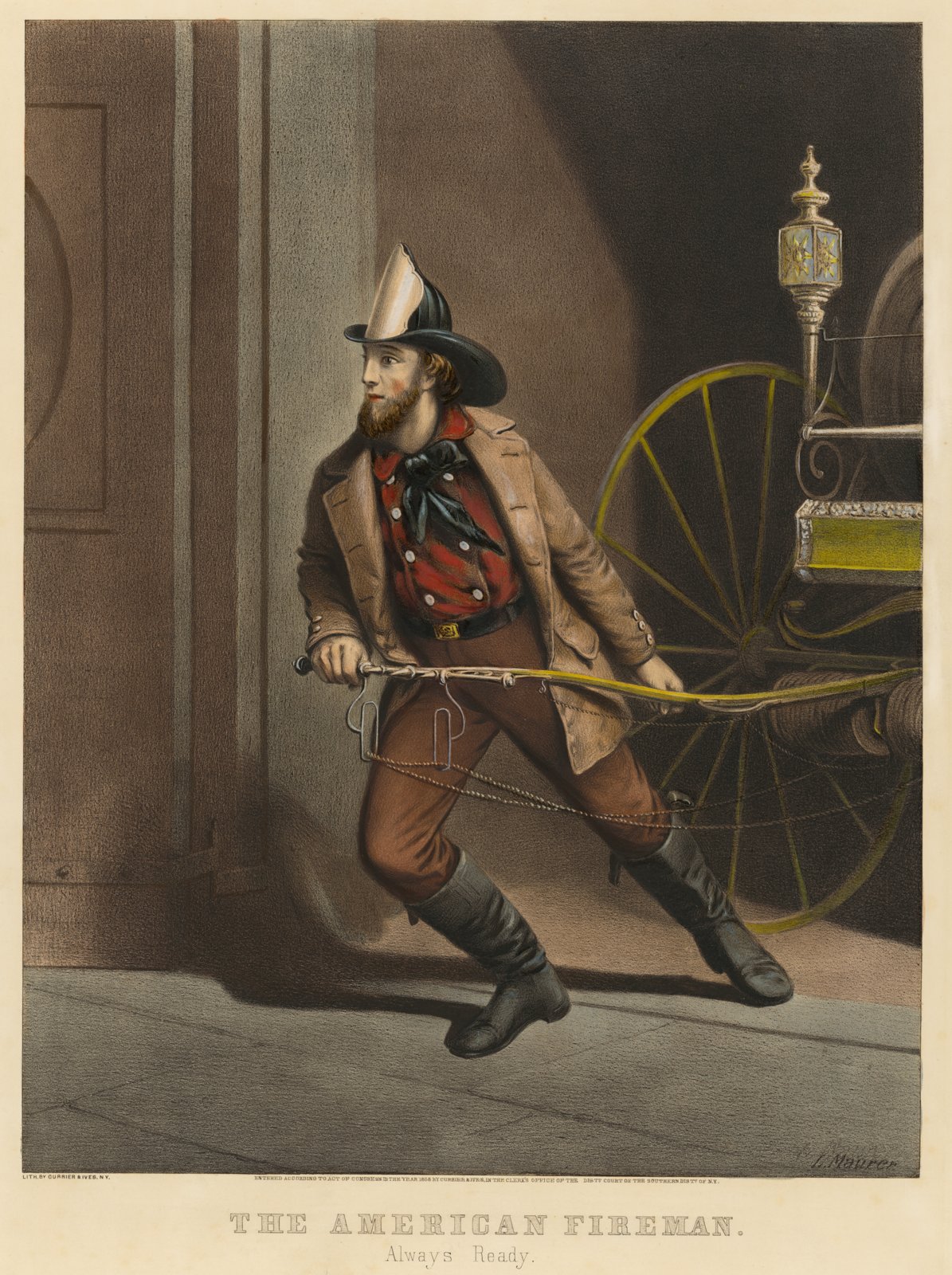
Steam engines arrived in the early 1800s, and adoption was slow. The resistance tells you something. Firefighters sabotaged a self-propelled steam engine built in New York in 1841, and it was shelved (Wikipedia). The people closest to the work saw the machine as a threat to the crew.
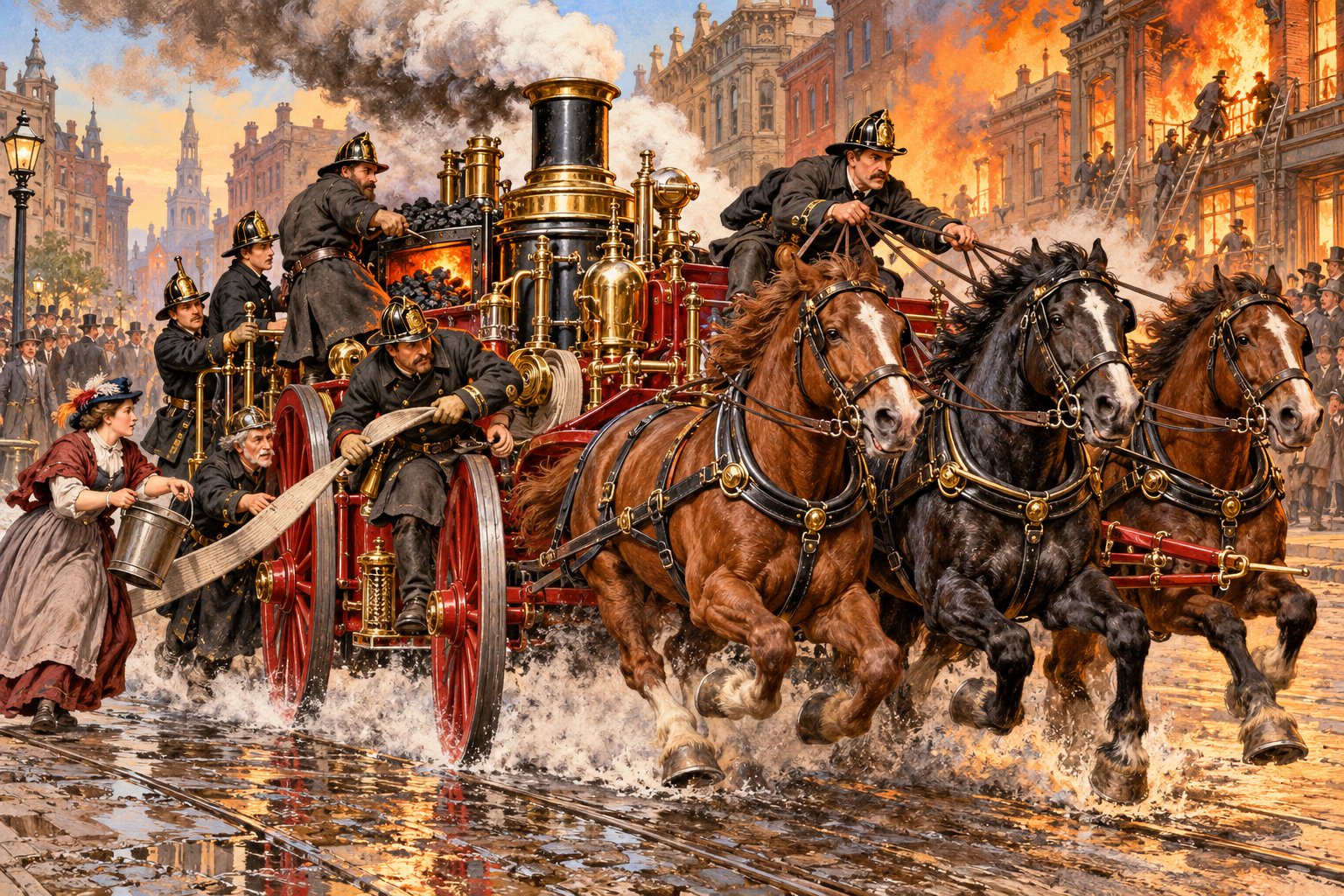
The motor finished the transition. A self-propelled engine debuted in New London, Connecticut in 1903, and the Knox Automobile Company was selling gasoline-powered fire engines by 1905 (Wikipedia). The horse went away, and so did most of the work of moving water by hand.
Fires did not go away, and neither did fire departments. The same crews became far more capable.
Who could do the job
When machines carry the load, strength stops being the whole job, and more kinds of people can do the work.
A bucket brigade was a test of raw strength and stamina. A pumper, a motorized truck, and powered equipment move the weight. That lets a smaller person, an older person, or a woman run the pump, drive the rig, and lead a crew.
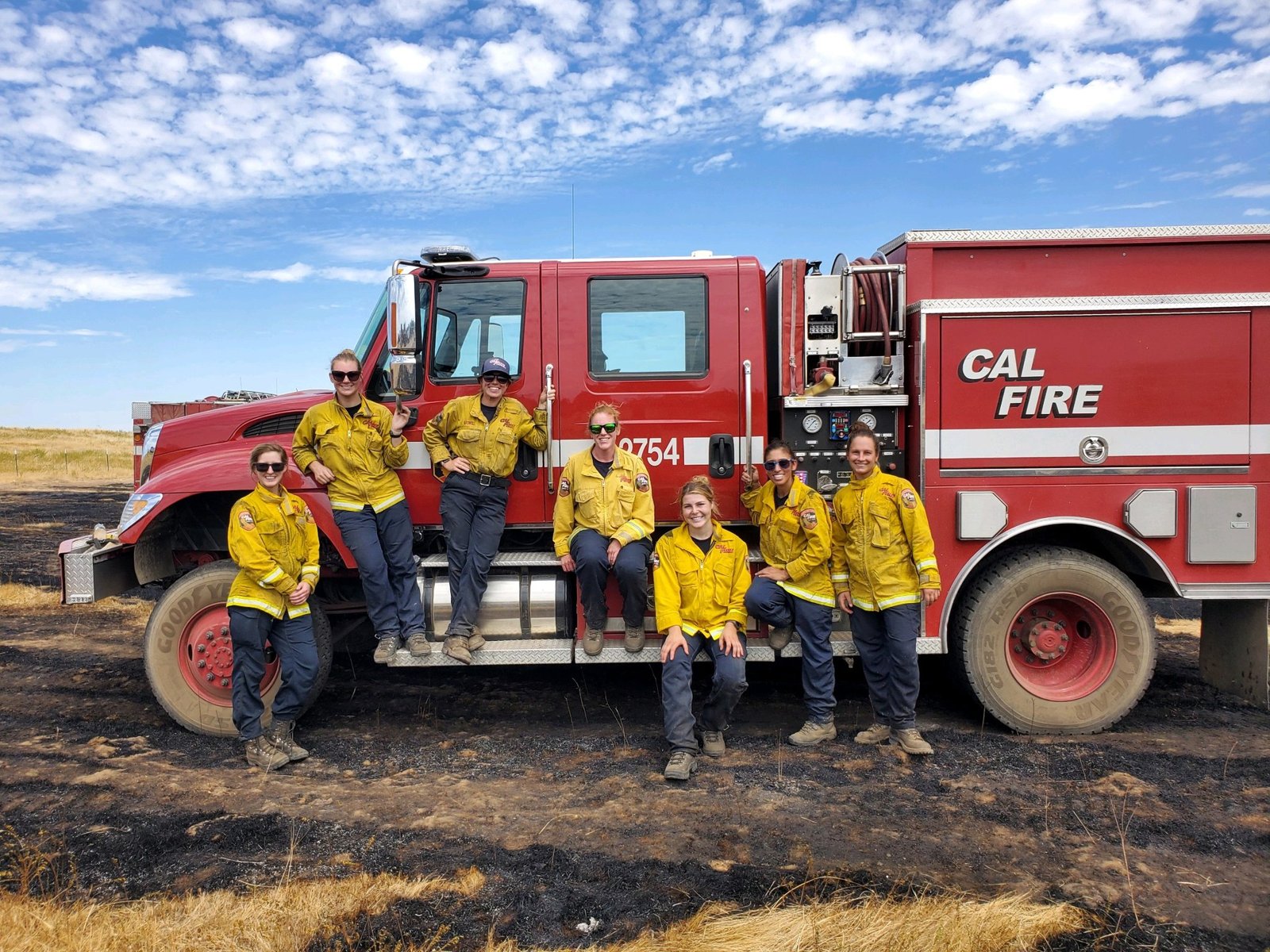
Technology opened the door, but it did not walk anyone through it. Molly Williams, an enslaved woman, is documented serving Oceanus Engine Company #11 in New York during an 1818 blizzard, and women formed separate brigades in the early 1900s. Judith Livers, hired by Arlington County, Virginia in 1974, is among the first recognized women career firefighters, and women are still under 10% of the US firefighting workforce (Brewminate).
That gap is the lesson for business. The machine widened who could do the job. Culture and leadership decided whether they were allowed to.
Seeing the fire sooner
Radios and sensors moved firefighting from reacting to a fire toward seeing it and directing the response.
Pump company foremen once gave orders through a large speaking trumpet (Haverhill Firefighting Museum). Two-way radio let an incident commander talk to every crew in real time. Today drones carry thermal cameras over burning structures and wildfires to find hotspots and track how a fire is moving. The Los Angeles Fire Department used them that way in the 2018 Woolsey Fire (UAV Coach).
Adoption has been fast. More than 500 US fire departments now use drones, up from just over 200 in 2018, and Fremont, California sends drones to 911 calls to size up the scene (UAV Coach).
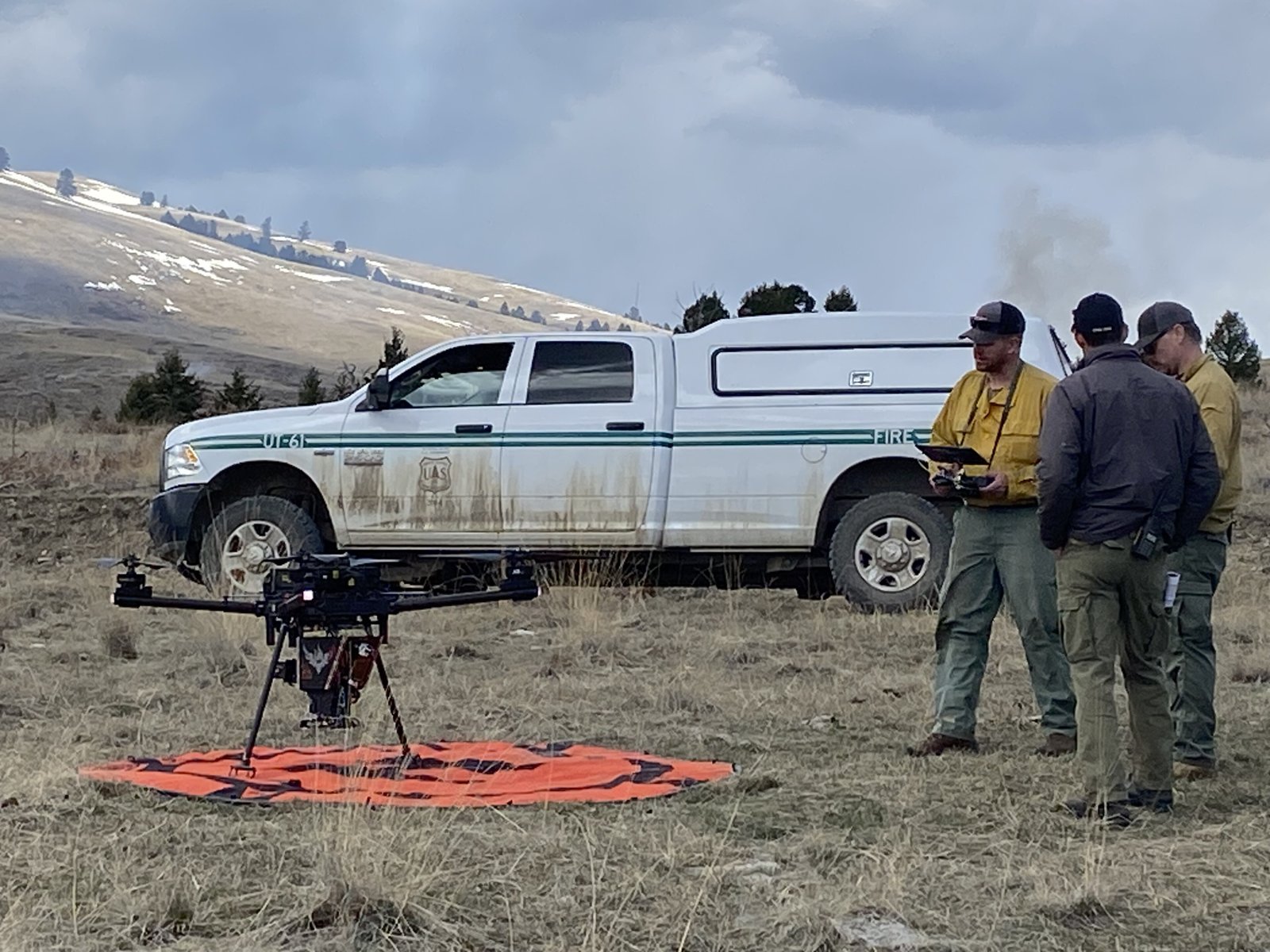
The work moved from hauling water to making decisions with better information. The firefighter who once passed buckets now reads a thermal image and decides where to send the crew. Judgment became the job.
AI is the pump cart for knowledge work
AI does for knowledge work what the pump cart did for the fire line: it takes the load, and it changes who can do the job.
Find the bucket brigade in your own business. It is the person copying numbers between systems, stitching six spreadsheets into one report, drafting the first version of every document, or hunting for an answer that already exists somewhere in the company. It takes a lot of people, and a lot of time & information gets spilled (wasted, lost) along the way.
AI takes that load. The analyst who spent Friday building the report can spend it deciding what the numbers mean. A smaller team, a newer hire, or a subject expert with no technical background can do work that used to need a specialist. The pool of people who can contribute gets bigger.
The fear is old, and it is understandable. The firefighters who sabotaged the steam engine in 1841 were protecting work they understood. The departments that adopted the machines did not disappear. They handled fires the bucket line never could.
There are two paths from here. An organization that treats AI as a way to remove people will spend its energy defending headcount. An organization that treats AI as leverage will take on bigger problems with the same people, and it will see those problems coming sooner. I know which one I would want to run.
What 35 years of technology waves taught me
In every technology wave I have worked through, the technology was never the hard part.
I have been inside BI, ERP, Cloud, and Big Data, and now I am inside AI. The fear showed up every time: this will cost people their jobs, this will make my skills worthless, this is being done to us. The tools worked. What determined the outcome was whether the organization changed how it worked.
Leading organizations to change HOW they work is what I do. That means changing the culture so a new technology gets adopted faster and with less pain. The fire service shows why it matters: a better pump helped, and a department that knew how to use it made the difference.
AI makes this easier to get wrong, because the tool is so easy to start using. Anyone can open a chat window on Monday. Getting EVERYONE to work differently by Friday is a leadership problem, and it always has been.
What leaders should do now
Treat AI as the pump cart, and start with the bucket brigade in your own organization.
- Find the bucket brigade first. List the manual, repetitive work that takes many hands and spills a lot along the way. That is where AI helps fastest and threatens least.
- Name ONE owner for each AI workflow. Tools without owners produce confusion at higher speed.
- Tell people plainly what the technology is for. If the goal is leverage, say so, and show where the freed time is going. Silence gets filled with fear.
- Redesign roles before the rollout, not after. The firefighter’s job changed from hauling water to making decisions. Decide what the new job is and train for it.
- Open the job to more people. When the machine carries the load, strength stops being the gate. Hire and promote for judgment.
What every worker should do now
The workers who thrive will take charge of these tools early, and the ones who wait will have the change done to them.
- Use it on real work EVERY day. Start with your own bucket brigade: the copying, the formatting, the first drafts, the searching. You learn what it does well and where it fails by using it. You cannot judge a tool you have never touched.
- Go deeper on the work behind the work. The firefighter reading a thermal image still has to understand how fire behaves. AI hands you answers, and you decide which ones are good. Deep knowledge of your field is what makes your judgment worth more than the machine’s guess.
- Own the result and check the output. AI makes mistakes, and the person who signs the work answers for it. Verify before you send. Reliability is a skill, and it gets more valuable as the tools get faster.
- Move toward decisions and people. The firefighter’s job shifted from hauling water to directing the response. Ask what you would do with the hours AI gives back, then take on the harder problem. Communication, trust, and judgment are your radio.
- Share what you learn. Show a teammate the prompt that saved you two hours. Tell your manager what you changed in your workflow. The person who makes everyone around them faster is the last one anybody wants to lose.
- Be willing to look like a beginner. Every crew had to learn the pump. Everyone starts at zero with a new tool, and the people who embrace that early on end up ahead.
Nobody becomes good at a new tool by waiting. Pick one task this week and hand it to AI.
Fires still happen, and we still need firefighters. We just fight them with far more reach than 25 people in a line.
If you are navigating this right now, let’s connect: https://www.linkedin.com/in/scrobertsassoc/